
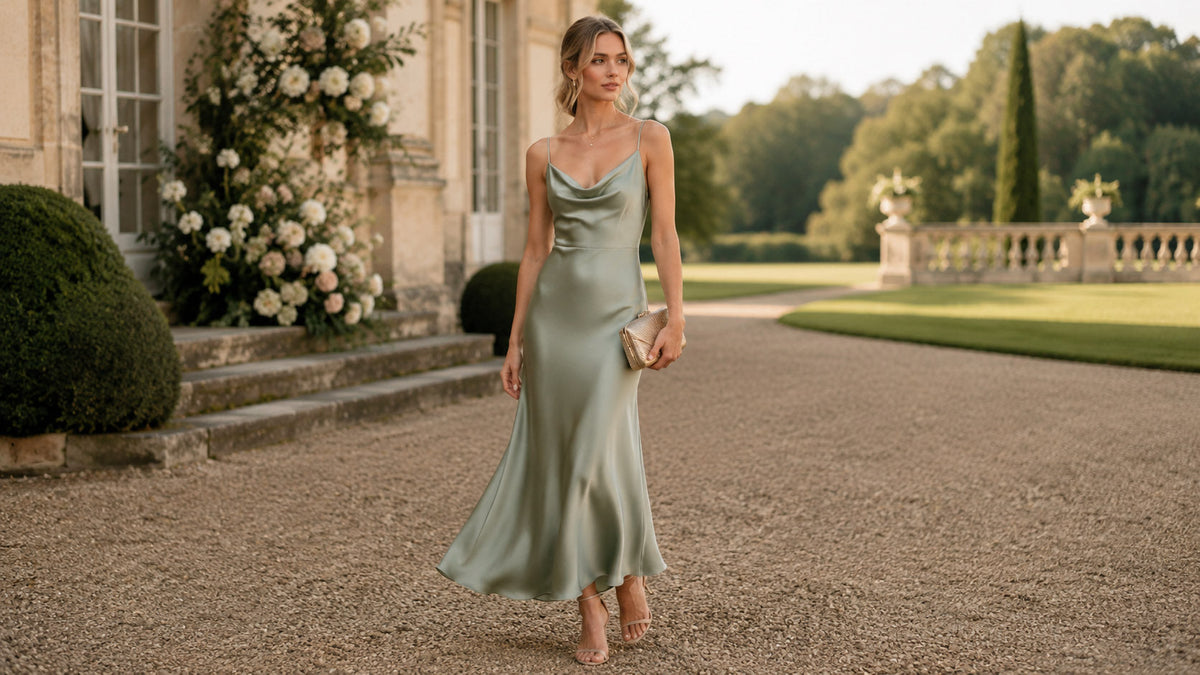
A silk dress is one of the finest choices a guest can make for a wedding — and one of the most commonly overthought. The questions surrounding it are predictable: Is the length right? Is the shade too close to the bridal palette? Is the neckline appropriate? This guide answers all of them clearly so that the dress decision becomes straightforward and the rest of the wedding preparation can take priority.
Why a Silk Dress Works So Well for Weddings
Silk inherently communicates occasion. Its natural sheen and fluid drape read as dressed up without requiring any additional effort on the wearer's part. Unlike polyester or synthetic satin — which mimic the visual appearance of silk without the breathability or the movement — real silk responds to the environment: it keeps you cool during an outdoor summer ceremony, moves gracefully during dancing, and photographs with the kind of depth that synthetic fabrics simply cannot replicate. For a wedding, where many photographs will exist for years, this distinction is not a small one.
What Colours Are Safe for a Silk Dress at a Wedding?

The two shades to approach with caution are white and ivory. These are conventionally reserved for the bride, and wearing them as a guest creates an awkward visual ambiguity in group photographs. If the dress is pale — a blush, a champagne, a very pale sage — it is worth reviewing whether, in a specific light or photograph, it could be confused with white. If there is any doubt, the safer choice is a deeper or more clearly differentiated shade.
Beyond those two, the full palette is available. Rich jewel tones work beautifully in silk — the fabric amplifies the depth of deep emerald, burgundy, or sapphire in a way that creates an elegant evening-event look. Softer tones like dusty rose, warm terracotta, or powder blue are appropriate for daytime garden and outdoor ceremonies. Neutrals — camel, stone, dove grey — are always appropriate and photograph cleanly against the full range of floral and venue backdrops.
Can You Wear Black to a Wedding?

In most Western contexts, yes — particularly for evening or formal receptions. A silk dress in a deep, rich shade worn for an evening wedding reception is not the sartorial offence it was once considered. Style it with gold jewellery and refined accessories to ensure it reads as considered occasion dressing rather than understated mourning. For a daytime garden wedding or a less formal outdoor ceremony, a richer or more varied tone is more contextually appropriate.
The Right Length for a Wedding

The most versatile length for a wedding guest is the midi — falling somewhere between the knee and the ankle, typically at mid-calf. It works across ceremony and reception, indoors and outdoors, seated and standing, without requiring any additional adjustment or self-consciousness. Maxi lengths are equally appropriate for both outdoor and indoor evening settings and photograph beautifully.
Shorter hemlines — above the knee — work well for informal daytime receptions or civil ceremonies in casual settings, but require more care at traditional church ceremonies or more conservative family occasions. When uncertain about the formality of the occasion, lengthen rather than shorten. A midi or maxi gives more room to navigate the specific dynamics of any wedding.
Silhouettes That Work Best

For weddings, silhouettes that drape and move rather than cling closely work best across the full day. Bias-cut styles are elegant and photogenic but require careful attention to what is worn beneath — a well-fitted slip in a matching tone eliminates any transparency concerns. Wrap dresses offer flattering adjustability throughout the day as the body changes with temperature and movement. A-line and empire-waist silk dresses provide comfort across extended periods without sacrificing the clean, refined line that makes silk appropriate for the occasion.
Very body-conscious or heavily ruched styles draw more attention than is generally appropriate as a guest. The silhouette should be beautiful but not so visually dominant that it competes with the wedding party for attention in photographs.
What to Wear With the Dress
Shoes should lean toward elegance: a heel or heeled sandal is the most conventional choice for a wedding and the one that scales most naturally across ceremony, drinks reception, and seated dinner. If the venue requires grass or gravel navigation, a low block heel or a sophisticated flat provides both comfort and visual clarity. Bring a small evening bag rather than a large tote — the occasion calls for something that stays in hand rather than over the shoulder. Jewellery should be present but not dominant: one or two refined pieces rather than a stacked, layered approach that pulls focus.
Practical Considerations for an All-Day Occasion
A wedding is often a ten-to-twelve-hour occasion across different environments — outdoor ceremony, indoor drinks, seated dinner, evening dancing. Choose a silk dress that you know from experience is genuinely comfortable over extended wear. A silhouette that requires regular adjusting, a length that becomes challenging on grass or stairs, or a neckline that needs monitoring throughout the day will cost you more in distraction than any styling gain is worth. The right silk dress for a wedding is one that you can put on at midday and still feel entirely at ease in at midnight.
Building the Full Look
For more guidance on what to wear around the dress itself — shoes, bags, and layers — the dedicated guide on what to wear with a silk dress covers each category in depth. For the complete approach to styling a silk dress across different occasions, the full styling guide has every context covered. A wedding is one of the occasions for which a silk dress is most naturally suited — the fabric's inherent elegance, its movement, and its photographic quality make the dress decision, once made, essentially effortless.
