
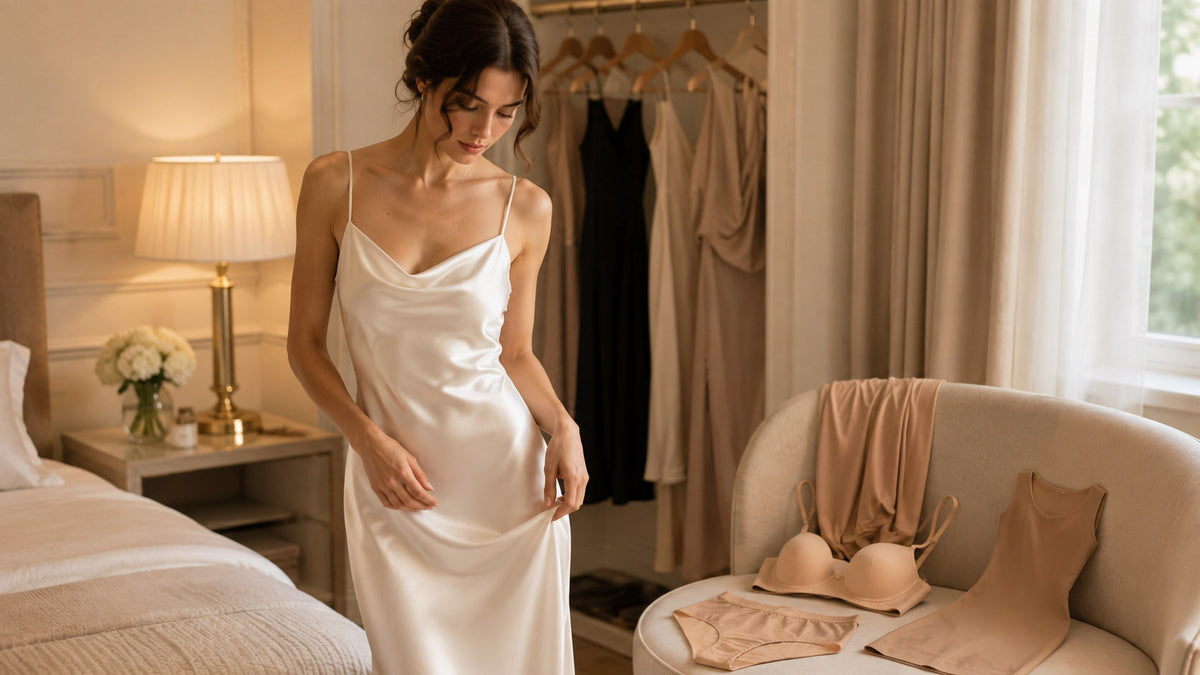
Wearing a silk dress well begins before you put it on. The choices you make about what goes underneath determine whether the dress falls the way it should, whether the silhouette reads as polished or compromised, and whether you feel genuinely comfortable for the full duration of wearing it. Silk is often lightweight and fluid — it drapes closely to the body and reveals more of the underlayer than heavier, more structured fabrics. Getting this right is one of the most practical things you can do for your silk wardrobe.
Understanding Why Underlayers Matter More in Silk
The qualities that make silk beautiful — its lightness, its drape, its fluid movement — are the same qualities that make what lies beneath it more visible. A seamed bra cup that would be invisible under a cotton dress shows clearly under silk. A structured waistband creates a ridge that disrupts the smooth fall of the fabric. A bra in the wrong tone is immediately apparent in natural light. None of these problems is difficult to solve once you understand what you are working with.
Choosing the Right Bra
What Bra Should You Wear Under a Silk Dress?
The most reliable choice for most silk dresses is a seamless, skin-toned bra with smooth, moulded cups. Seamless construction eliminates the visible outline that structured bras create under lightweight fabric. A tone that matches your skin rather than the dress disappears beneath the silk — the opposite of what a white or brightly coloured bra does, even under a pale dress. This combination works across the widest range of dress styles and fabric weights.
How to Hide Bra Lines
For dresses with a low back, a racer back, or an open-back design, a standard bra is not a workable option. Adhesive bras, silicone nipple covers, and bra solutions designed specifically for backless dresses provide coverage without any visible straps or band. These work best for dresses that are structured enough through the bust to support themselves — bias-cut and very fluid styles may need a different approach.
Can You Wear a Silk Dress Without a Bra?

For many women and many silk dress styles, this is the most comfortable and aesthetically cleanest option. A loose slip dress, a fluid maxi, or any style with enough internal structure through the bodice often looks and feels best worn without a bra at all. The natural drape of the silk creates its own silhouette, and without any underlayer to compete with it, the dress falls exactly as it was designed to. Whether this is appropriate depends on the specific dress, the occasion, and your own comfort level — all three matter equally.
What Underwear Should You Wear Under a Silk Dress?

Visible panty lines (VPL) are among the most common and easily avoided challenges of wearing a silk dress. The solution is straightforward: seamless underwear in a skin tone that matches your body. Seamless construction eliminates the edge that creates a visible line through the fabric; matching your skin tone ensures that the underwear reads as an extension of your body rather than a separate garment layer.
Thong styles in seamless fabrics eliminate the back-line issue entirely. High-waisted seamless briefs are another excellent option for dresses that fall below the waist, as they extend the smooth zone higher and eliminate the hip-line that mid-rise underwear sometimes creates. Avoid lace-edged underwear under silk — the texture of the lace prints through the fabric and creates an irregular pattern that is clearly visible.
What Colour Underwear Should You Choose?
The guiding principle is the same as for bras: match your skin, not the dress. Skin-tone underwear disappears beneath silk in a way that white, cream, or any other colour does not. This applies even under pale or white silk dresses — white underwear under white silk creates a contrasting double layer that is visible in daylight. Nude, blush, or whatever tone most closely matches your own skin is the universally reliable choice.
Should You Wear a Slip Under a Silk Dress?

A silk or satin slip is one of the most effective underlayer solutions for silk dresses — particularly for dresses that are slightly sheer, or that cling more than you would like. A slip in a skin tone creates a smooth, opaque layer that eliminates transparency, reduces static and cling, and adds a small amount of warmth in cooler conditions. It also makes the silk dress itself more comfortable to wear for extended periods, as it acts as a barrier between the dress and the skin.
Choose a slip that is slightly shorter than the dress and fitted — a slip that is too wide will bunch underneath and affect the dress's silhouette. A fitted slip in a fine, smooth fabric (silk or modal) creates the most streamlined result. For more on managing cling and static specifically, the guide on how to stop a silk dress from clinging covers those challenges in full.
What to Wear Under a Sheer Silk Dress
Genuinely sheer silk — fine chiffon or light georgette — requires a more considered approach. A matching bodysuit or camisole and shorts set in a skin tone creates a coordinated underlayer that looks intentional if glimpsed through the fabric. A well-fitted slip in a matching or complementary tone is an alternative. For very sheer evening dresses, a deliberately visible slip in a contrasting or complementary tone can be a style choice in itself — worn as part of the look rather than hidden beneath it. The key is that it looks considered, not accidental.
Shapewear and Smoothing Solutions
For occasions where you want the smoothest possible silhouette beneath a silk dress, seamless shapewear in an appropriate length provides light control without visible seams or edges. Choose shapewear designed for smooth fabrics — pieces with flat edges and a seamless exterior surface — and ensure the hemline of the shapewear falls at a point that will not show beneath the dress's hemline. Avoid shapewear with lace or textured edges, which create exactly the visible lines you are trying to eliminate.
The Complete Underlayer Formula
For most silk dresses and most occasions, the combination that works most reliably is a seamless skin-toned bra plus seamless skin-toned underwear, with a fitted slip for dresses that are sheer or prone to clinging. This combination is invisible, comfortable for extended wear, and creates the smoothest possible base for the silk to drape over. Once you have the right pieces in your wardrobe, wearing a silk dress becomes entirely straightforward. For guidance on the complete outfit beyond the underlayer, the full silk dress styling guide covers every occasion from casual to formal.
