
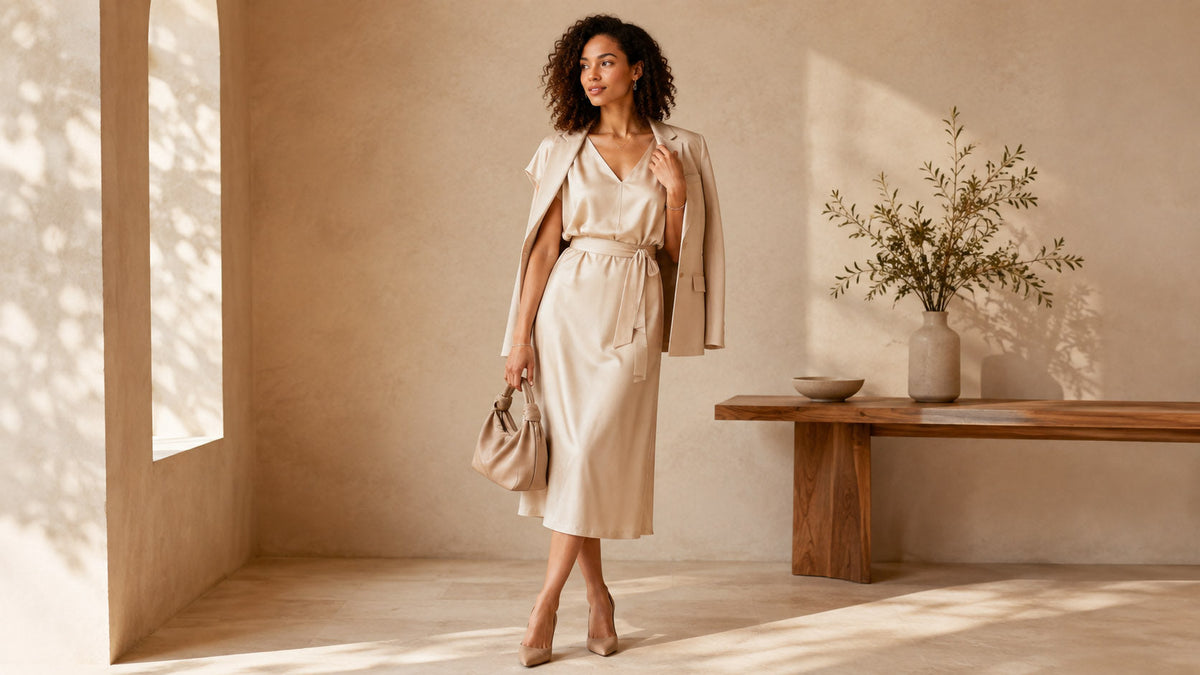
A silk dress rarely needs much help — but what surrounds it matters more than most people realise. The shoes, the bag, the layer you reach for on the way out: each of these choices either amplifies what the silk is doing or works against it. The good news is that once you understand the logic of building around a silk dress, the combinations become intuitive rather than effortful. This guide covers each element — footwear, bags, outerwear, and jewellery — so that every silk dress you own has a clear wardrobe ecosystem around it.
Shoes to Wear With a Silk Dress

Footwear is the single most powerful variable in how a silk dress reads. The same dress, worn with flat sandals and again with a heel, becomes two different outfits with two different registers — and both can be completely right depending on where you are going.
The Best Flat Shoes for a Silk Dress
Flat shoes ground a silk dress in the daytime and make the combination feel deliberate and current. Pointed leather flats are among the most versatile options: they add a slight formality that supports the refinement of the silk without adding height. Mule sandals in leather or suede work particularly well with midi and maxi lengths, creating an elegant, flowing line from hemline to foot. Loafers in a natural or neutral tone bring a slightly more structured energy that works well with shirt dress silhouettes and more tailored cuts. The one flat shoe to approach carefully is the rubber-soled ballet flat — it works, but only if it is genuinely well-made and fitted correctly.
Heels That Work With Silk
For evening, a strappy sandal heel is the most reliable pairing for the majority of silk dress silhouettes. It adds the height and occasion-signalling that the evening context requires without adding visual weight that competes with the dress. Block-heeled mules offer a more modern alternative — they are easier to walk in, which matters for longer events, and they have a sculptural quality that reads as considered. Kitten heels work well with midi lengths, particularly bias-cut or slip-style silhouettes where a lower heel keeps the proportion balanced.
The Right Bag for a Silk Dress

The bag does two jobs alongside a silk dress: it carries the practical load, and it signals the register of the occasion. Choose it to complete the outfit, not to contrast with it.
Daytime Bags
For daytime, a structured tote or shoulder bag in leather or a leather-look fabric gives the outfit a grounded, practical energy that works against the silk's inherent formality in exactly the right way. Woven or raffia bags bring a warm, holiday-adjacent feeling that pairs particularly well with loose silk slips and maxi silhouettes worn with flat sandals. The key for all daytime bag choices is that the bag has clear structure — it should not look provisional or accidental alongside the intentionality of the silk.
Evening Bags
For evening, scale down. A small clutch, a minaudière, or a compact crossbody shifts the register of the outfit from functional to considered. Satin-finish clutches create a tone-on-tone effect when carried alongside a silk dress; metallic finishes add evening light without competing with the fabric. The size of the evening bag communicates occasion — the smaller it is, the more the occasion is signalled as elevated. A full tote at an evening event undercuts the rest of the outfit; a small clutch elevates a daytime outfit at the same occasion.
Layers Over a Silk Dress

Lightweight Jacket Options
The most useful layer over a silk dress is one that creates deliberate contrast in texture and formality without fighting the silk for attention. A fine-knit cardigan in a neutral tone adds warmth without adding visual weight. A tailored linen blazer adds structure and authority that works for more formal daytime contexts. A denim jacket adds a casual, grounded energy that works well for relaxed weekend occasions — the contrast between the precision of denim and the fluidity of silk is exactly what makes the combination contemporary.
Evening Layers
For cooler evenings, a light wrap or oversized scarf in a fine knit or woven fabric can be carried over the shoulders without interrupting the line of the dress beneath. Leather jackets, when slim-fitting and worn loosely off the shoulder, work with more relaxed silk silhouettes. Avoid structured coats in heavy fabrics over silk dresses — the weight and volume crush the silhouette of the dress and read as mismatched in formality.
Jewellery and Accessories

Silk calls for restraint in jewellery. The fabric itself carries enough visual presence that adding too much competes with rather than complements it. For daytime, choose one piece: a simple chain, small earrings, or a cuff. For evening, one more deliberate piece is appropriate — a sculptural earring, a layered necklace, or a bangle with some weight to it. The formula is: one piece for day, two for evening, never more than three at any time. Jewellery in gold or silver finishes works with the sheen of the silk in a way that costume jewellery in plastic or acrylic tones generally does not.
What Not to Pair With a Silk Dress
Certain combinations actively undermine what the silk is doing. Overly casual footwear — thick-soled trainers, chunky platform sandals — creates a mismatch in formality that reads as accidental rather than considered. Heavily logo-printed bags pull the focus entirely away from the dress. Layering too many accessories removes the quiet, considered quality that makes a silk dress work. The rule is simple: if any one element of the outfit is louder than the silk, the balance is off. When in doubt, remove something rather than adding.
The Complete Outfit Picture
For the full guide on how to build outfits around different silk dress silhouettes and occasions, the complete silk dress styling guide covers every context from casual to formal. If a wedding or formal occasion is the specific challenge, the wedding guest dress guide takes shoes, bags, and layers in the context of that specific occasion. The logic is always the same: support the silk rather than compete with it, keep it considered, and build outward from the dress as the centrepiece.
