
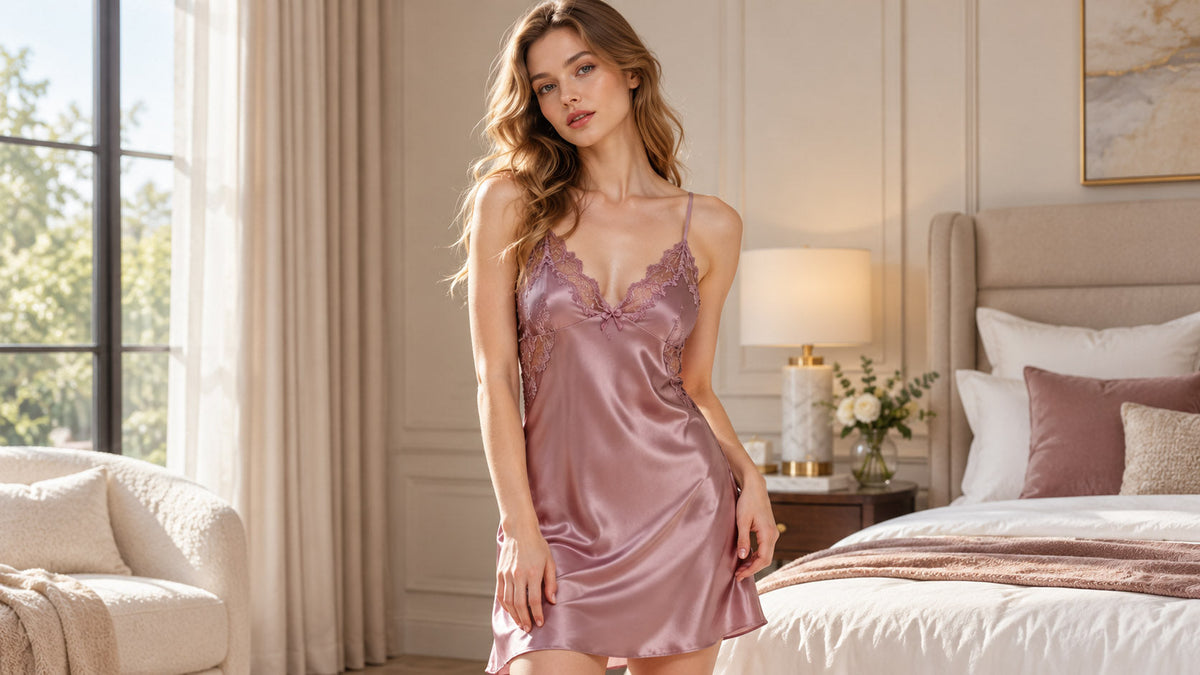
Choosing a silk nightgown is not simply a matter of picking a style you like the look of. The right nightgown needs to function well during sleep — moving with your body, staying comfortable through the night, and holding its shape over time. Whether you are buying for everyday sleep or a special occasion, the details that distinguish a well-made piece from a poorly constructed one are worth understanding before you invest.
What to Look for in the Fabric

The most important factor is fabric composition. A genuine silk nightgown should be made from 100% mulberry silk — the most refined and consistent variety commercially available. Mulberry silk is cultivated from silkworms fed exclusively on white mulberry leaves, producing a filament that is smoother, stronger, and more uniform than wild or tussah silk.
Momme weight describes the density of the weave. For nightgowns, a weight between 16 and 22 momme is generally appropriate — light enough to breathe and drape well, substantial enough not to feel insubstantial against the body. Our guide to choosing the right momme for silk sleepwear explains the differences in more detail. When buying, look for explicit momme labeling — if a brand avoids stating it, that itself tells you something.
Opacity is another practical consideration. Bias-cut silhouettes and lighter momme weights tend to be more translucent. If full opacity matters to you, look for structured or lined styles, or choose a higher momme weight.
Construction Details That Indicate Quality

Hold the nightgown up to the light. Quality construction reveals itself in the seams — they should lie flat, show no pulling, and be finished neatly inside. French seams or rolled edges are signs of careful workmanship. Exposed raw edges or visible serging on an otherwise refined piece suggest shortcuts were taken.
Straps and Necklines
On spaghetti-strap styles, check whether the straps are adjustable. They should be — because silk has minimal stretch, and a strap that is even slightly too short or too long will affect both comfort and coverage throughout the night. Wide straps or camisole-style shoulders distribute weight more evenly and tend to stay in position better for restless sleepers.
Necklines that plunge too low at the bust may work beautifully while standing but shift significantly when lying down. A deeper neckline paired with a bralette or shelf cup lining provides more security. For more guidance on how all of these elements interact while sleeping, see How Should a Silk Nightgown Fit?
Hem and Lining
The hem finish affects both drape and longevity. A hand-rolled hem on a bias-cut piece allows the fabric to fall naturally — machine-stitched hems on bias cuts can cause the hem to buckle or ripple over time. Lining adds opacity and body, but it also adds warmth. For warm sleepers, an unlined style with a higher momme weight is usually the more comfortable choice.
Silhouette, Cut and Length

The two most common silhouettes in silk nightgowns are the bias cut and the A-line. A bias-cut nightgown is cut diagonally across the grain of the fabric, which gives it a characteristic body-skimming drape and fluid movement. An A-line cut, with its gentle flare from the waist or hip, offers more ease through the lower body and tends to move less against the skin during sleep.
Each has genuine advantages depending on your body and how you sleep. For a full comparison, see Bias-Cut vs A-Line Silk Nightgown. Length is equally personal — from a short style ending at mid-thigh to a full-length nightdress reaching the ankle. Long vs Short Silk Nightgown explores which length suits different sleeping habits and temperatures.
Sleeve options range from sleeveless and spaghetti-strapped to cap, short, three-quarter, and full-length sleeves. The choice largely comes down to temperature preference and how warmly you sleep. For detailed guidance by sleeve style, see Sleeveless vs Sleeved Silk Nightgown.
Everyday Sleep vs Special Occasions

A nightgown intended for everyday wear should prioritize practical durability: reinforced seams, adjustable straps, a secure fit that does not require constant adjustment. Simpler styles in a mid-range momme — 19 to 22 — wear and wash well over time.
A nightgown for a special occasion can prioritize drape and finish over durability. Delicate lace inserts, finer momme weights, hand-finished details, and slip-style silhouettes all feel more deliberate when the context calls for it.
It is also worth understanding the difference between a nightgown, a chemise, a slip, and a negligee before buying — these terms are used inconsistently across brands. A clearer definition of each garment can be found in Silk Nightgown vs Chemise vs Slip.
Common Buying Mistakes
The most frequent mistake is buying based on images alone without considering how the garment will behave in motion. A nightgown that photographs beautifully may pull at the hips, twist overnight, or lose its shape after a few washes if the construction is not genuinely sound.
A second common error is choosing a size based on daywear measurements without accounting for ease at the bust and hips. Silk does not stretch, so a fitted style needs sufficient ease to allow comfortable movement. If in doubt, sizing up is almost always the better decision for nightwear.
Finally, watch for fabric descriptions that use the word silk without specifying composition. Satin weave polyester is often marketed ambiguously — it has a similar sheen but entirely different properties in terms of temperature regulation and durability. If full composition is not listed, ask.
For women who want to browse pieces built with these criteria in mind, the women's silk nightgowns at The Silk Avenue are constructed in mulberry silk with the kind of finish detail this guide describes.
Frequently Asked Questions
Should a silk nightgown be lined or unlined?
Lining adds opacity and structure but also warmth. For warm or hot sleepers, an unlined nightgown in a heavier momme weight offers better temperature comfort while still providing adequate coverage.
How do I know if a silk nightgown is well-made?
Look for flat, neat seams — ideally French seams — adjustable straps on spaghetti styles, a smooth hem that does not ripple on bias-cut pieces, and explicit labeling of both silk composition and momme weight.
What momme weight is best for a silk nightgown?
16 to 22 momme covers most needs. Lower momme weights drape more fluidly but may be more translucent; higher weights feel more substantial. For a detailed breakdown, refer to the momme guide for silk sleepwear.
Can I wash a silk nightgown at home?
Many high-quality silk nightgowns can be hand-washed in cool water with a gentle silk detergent. Always check the care label first.
