
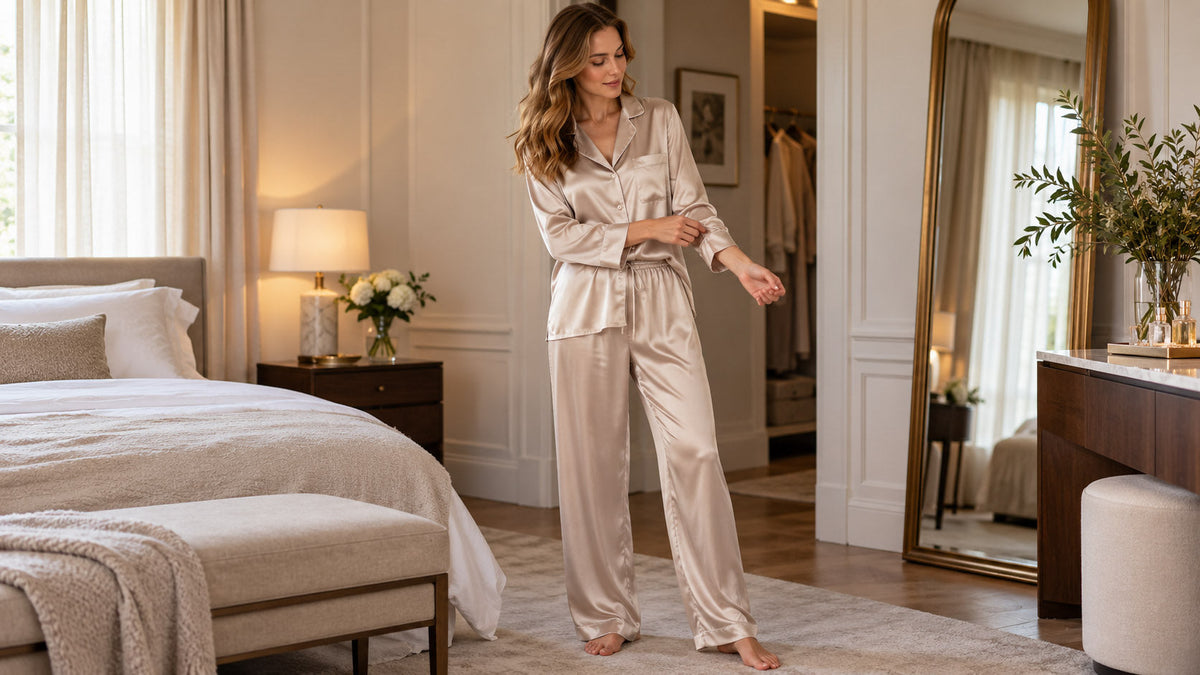
Fit is one of the most commonly underestimated variables in the comfort of a silk pajama set. The fabric itself — its drape, its smoothness, its temperature-regulatory properties — only performs as intended when the fit allows it to function correctly. A silk pajama set that is too tight restricts movement and pulls against the body; one that is significantly too large loses the clean, considered drape that makes silk sleepwear distinctively comfortable. This guide covers how silk pajamas should fit across every key dimension.
The Core Principle: Relaxed but Not Shapeless

Unlike fitted daywear, silk pajamas are designed with generous ease — additional room beyond body measurements that allows the fabric to drape away from the body rather than cling to it. This ease is intentional: it allows air to circulate between the fabric and the skin, supports comfortable sleep movement, and creates the fluid silhouette that silk pajamas are known for. The target fit is relaxed but not oversized — the fabric should fall cleanly and move freely, but the garment should not look borrowed or feel like it is swamping the body.
How the Top Should Fit
Shoulders and Chest
The shoulder seams of a silk pajama top should sit at or just inside the edge of the shoulder — a seam that falls onto the upper arm indicates the top is too large; one that pulls inward toward the neck indicates it is too small. Through the chest and bust, there should be clear ease — no pulling across the fullest point, no horizontal drag lines in the fabric. For women with a fuller bust, sizing up and accepting that the top will be slightly larger elsewhere is generally preferable to the pulling and distortion that occurs in a top that is too small through the chest.
Sleeves and Length
Long-sleeve silk pajama tops should reach to the wrist or just above it when the arms are relaxed at the sides — sleeves that fall significantly short create an unfinished look and leave the forearms exposed to cool air. The body length should reach below the waistband of the trousers when the arms are raised — a top that exposes the midriff when you move in bed is too short and will disrupt sleep with constant repositioning.
How the Trousers Should Fit
Silk pajama trousers should fit with clear ease through the hips and thighs — enough room to move freely without the fabric pulling taut in any position. The waistband should sit comfortably at the natural waist or just below it, elasticated or drawstring-adjusted to hold securely without pressure. For full-length trousers, the hemline should reach the ankle or just above it — silk that pools on the floor creates a tripping hazard and wears more rapidly at the hem from contact with the ground.
Should You Size Up in Silk Pajamas?

When in doubt between two sizes, sizing up is the more reliable choice for silk pajamas. Because silk does not stretch — it is a non-elastic natural fibre — a pajama set that is even slightly too small through the hips, bust, or shoulders will pull and restrict rather than give. A set that is one size larger than necessary will simply drape more loosely, which is perfectly consistent with the intended relaxed fit of sleepwear. The one exception to this guidance is very petite women, who may find that sizing up creates excessive length in the sleeves and trousers that cannot be easily managed — in those cases, looking for petite-cut options or accepting that some tailoring may be needed is the better path.
Silk Does Not Stretch: Why This Matters
Unlike jersey cotton or knit fabrics that accommodate a range of sizes through their elasticity, silk is essentially inextensible. It drapes and flows but does not give under tension. This means that a silk pajama set that fits perfectly at rest will feel tight as soon as you move if there is insufficient ease built into the cut. When assessing fit, always move through the full range of sleep positions — sitting up, lying down, turning over — rather than evaluating fit only while standing still. A fit that feels fine standing can reveal pulling or restriction in the positions that actually matter for sleep.
Style and Cut Choices That Affect Fit

The cut of the pajama set also affects how fit should be evaluated. A classic loose-cut pajama has more inherent ease and is more forgiving of sizing variation than a more fitted camisole-style top paired with tapered trousers. When choosing between styles, consider which silhouette you find most comfortable for sleep — and remember that more fitted styles require more precise sizing to perform correctly. For guidance on which style works best for different sleeping conditions and temperatures, the article on long vs short silk pajamas covers the style comparison in full. And for the full picture on choosing the right set — fabric weight, construction, and fit together — the guide on how to choose a high-quality silk pajama set brings every variable together.
The Fit Summary
A well-fitting silk pajama set sits cleanly on the shoulder, moves without pulling, has clear ease through the chest, hips, and thighs, and drapes smoothly rather than clinging. When uncertain, size up. Silk does not stretch, and a relaxed fit in sleepwear is always preferable to a restricted one. The right fit allows the fabric to perform as it was designed — moving with you, regulating your temperature, and staying comfortable throughout the night without requiring adjustment.
