
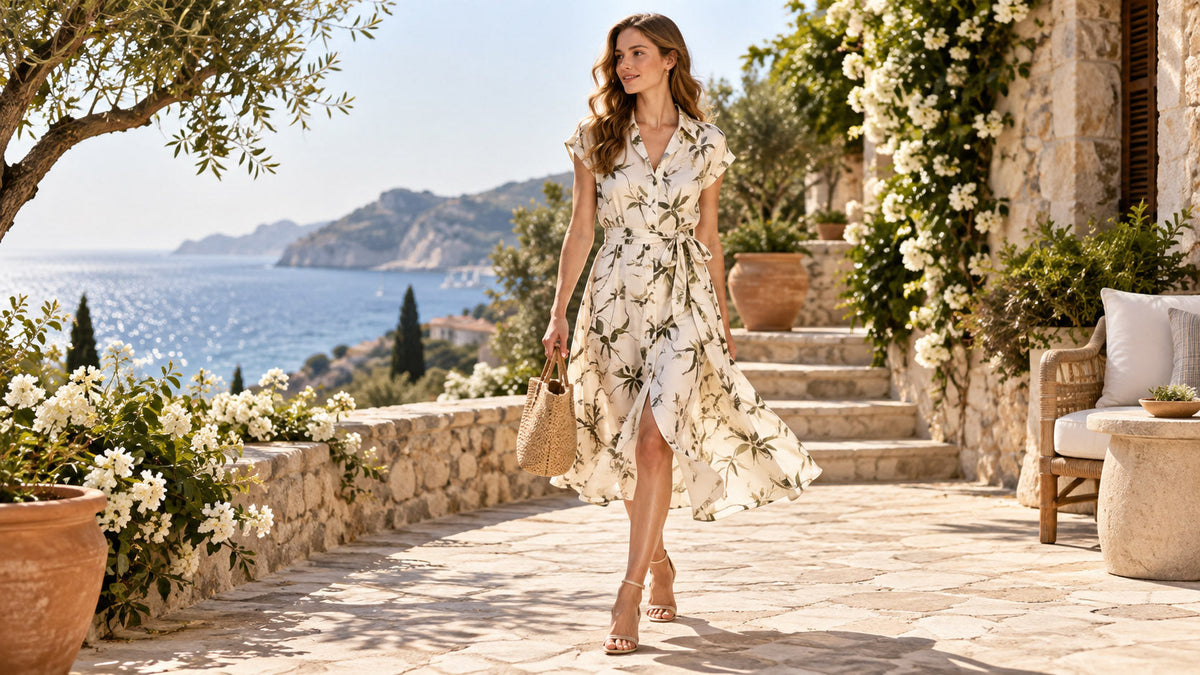
The question of whether a silk dress is a good choice for summer is a reasonable one — and the honest answer is more nuanced than either a simple yes or a simple no. Silk is genuinely one of the most temperature-responsive natural fibres available, but it also requires specific care in heat that other fabrics do not. Understanding both sides of this picture allows you to wear a silk dress confidently in summer — knowing when it is the best possible choice, and when a different silk weight or silhouette might serve better.
Why Silk Is Naturally Good in Heat
Silk is a protein-based natural fibre — it comes from the cocoon of the silkworm, and its molecular structure is fundamentally different from that of synthetic fabrics like polyester or nylon. This structural difference has direct consequences for how it behaves in warm temperatures.
Silk is naturally breathable: its fine, tightly woven fibres allow air to circulate between the fabric and the skin, preventing the trapped-heat effect that synthetic fabrics produce. It is also a natural moisture-wicking material, meaning it moves perspiration away from the skin and allows it to evaporate, rather than absorbing and holding it against the body. The result is a fabric that stays noticeably cooler against the skin than its visual weight might suggest.
How Silk Compares to Other Fabrics in Summer
Against cotton, silk is lighter and more fluid in movement, with a finer hand that sits less heavily against the skin in heat. Against linen, silk is smoother and drapes more gracefully, though linen's open weave can outperform fine silk charmeuse in very high humidity. Against synthetic fabrics — polyester, nylon, viscose-polyester blends — silk is significantly more breathable and considerably more comfortable across extended warm-weather wear. The comparison most relevant to a silk dress versus a satin dress is covered in full in the dedicated article on silk vs satin, which addresses this question directly.
The Considerations: When Silk Needs Care in Summer
Perspiration and Silk
The most common concern about wearing silk in summer is perspiration. Silk is sensitive to prolonged contact with sweat — the salt content can, over time, weaken the fibres if the garment is not cared for after wear. This does not mean silk cannot be worn in heat; it means that silk worn in summer should be aired carefully after each wear and washed more regularly than silk worn in cooler conditions. A silk dress worn in summer is not a garment for repeated consecutive wears without washing.
Sweat Stains and Silk
Sweat stains on silk are more visible and more difficult to remove than on cotton or synthetic fabrics. For situations where significant perspiration is likely — a full day of outdoor activity in high heat — a thin layer beneath the dress (a fine camisole or a light underlayer) provides a barrier between the silk and direct contact with the skin, extending the life of the dress and reducing the risk of visible marking. This approach also reduces the need for frequent washing, which itself extends the garment's longevity.
The Best Silk Weights and Silhouettes for Summer

Not all silk dresses behave identically in summer — the weight of the fabric matters significantly. Lighter-weight silk — charmeuse, silk georgette, and lightweight silk crepe — performs best in heat, offering the most airflow and the least thermal mass against the body. Heavier silk weights — heavier charmeuse, silk twill, or silk satin — retain more heat and are better suited to milder or air-conditioned environments.
For silhouette, loose and non-clingy cuts perform best in summer. A slip dress or a flowing maxi in a lightweight silk allows air to circulate freely around the body. Closely-fitted or body-conscious silhouettes work less well in high heat — the reduced airflow makes the fabric feel warmer and the fit becomes more prone to clinging as the temperature rises. For more on managing cling specifically, the guide on how to stop a silk dress from clinging addresses every practical solution.
Summer Silk Styling Tips
In summer, the most reliable silk dress combination is the simplest: a lightweight silk dress, flat leather sandals, a woven bag, and minimal jewellery. No additional layers in high heat. For cooler evening temperatures — outdoor dining, a coastal evening — a very light linen wrap or a fine cotton scarf is enough of a layer, given that the silk itself retains a small amount of warmth.
For travel in summer, a silk dress is one of the most efficient pieces you can pack. Silk is naturally crease-resistant when packed correctly (fold loosely rather than tightly pressed), takes up minimal space, and transitions across the full range of summer occasions without requiring additional pieces to support it.
The Verdict
A silk dress is an excellent choice for summer — with the appropriate weight, silhouette, and care approach. It outperforms synthetic alternatives in breathability and comfort across extended warm-weather wear. The considerations around perspiration and care are real but manageable. Worn well and cared for consistently, a silk dress in summer is one of the most genuinely comfortable and visually refined choices available. The fabric was not invented for cold-weather dressing — it earns its place in the warmest months as much as in any others.
