
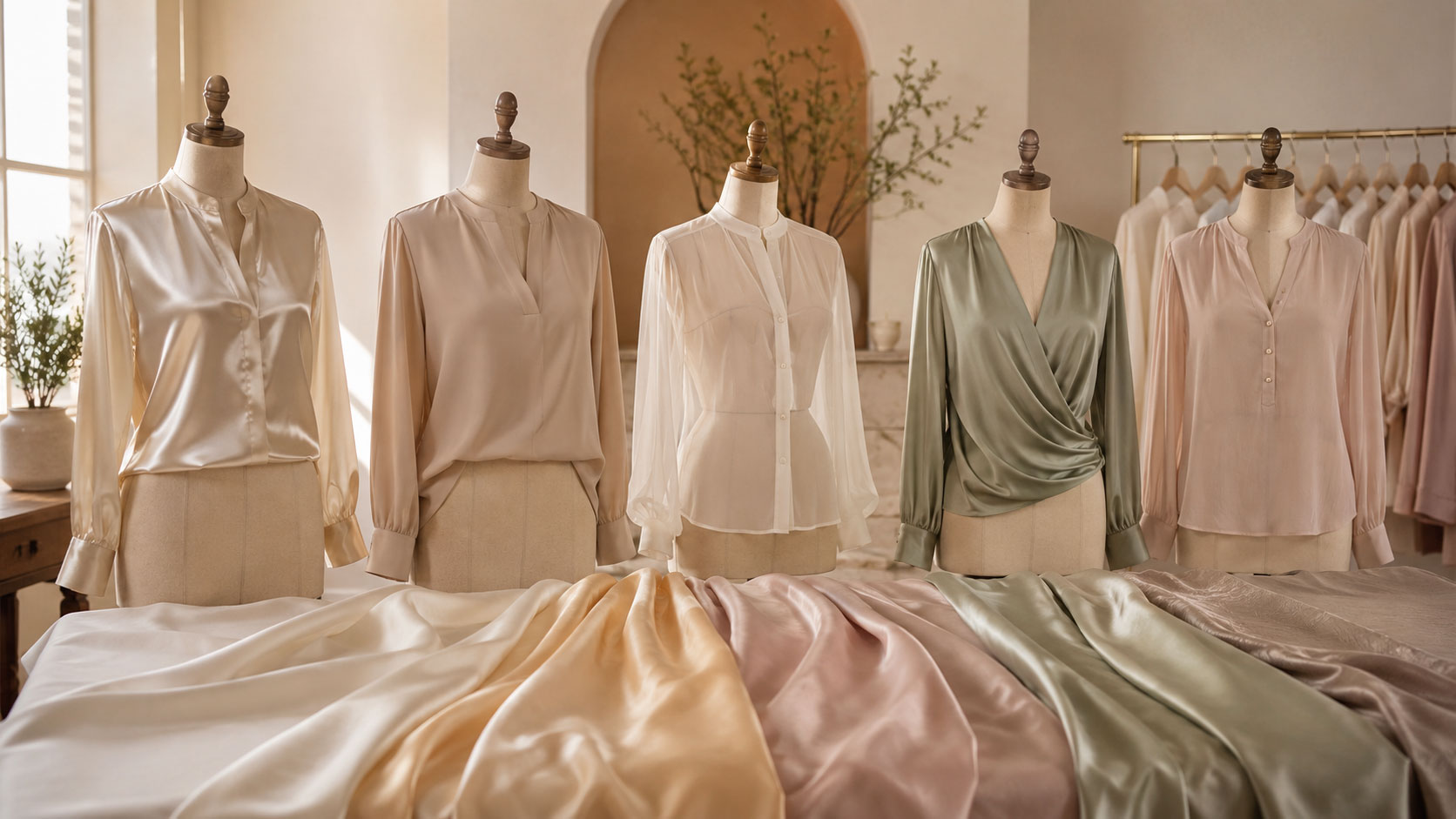
Not all silk blouses are made the same way — and the experience of wearing one can vary enormously depending on the specific silk fabric used in its construction. Charmeuse drapes differently from georgette; crepe de chine behaves differently from chiffon. Each has its own texture, weight, level of transparency, and ideal occasion. Understanding the distinctions helps you choose more intentionally, care for each blouse correctly, and build a wardrobe of silk pieces that genuinely serve different needs.
Mulberry Silk: The Foundation of Everything

Before discussing weave types, it is worth establishing the raw material distinction that matters most. Mulberry silk is produced by Bombyx mori silkworms fed exclusively on white mulberry leaves, resulting in a filament of extraordinary fineness and consistency. It is the highest-quality silk available and the base material used in the best blouses. The weave types below can all be produced from mulberry silk — and when they are, they perform significantly better in terms of feel, drape, and longevity than the same weaves produced from lower-grade silk or silk blends.
Silk Charmeuse

Silk charmeuse is the fabric most people picture when they think of a silk blouse. It has a bright, fluid satin face and a dull, matte back — a contrast that gives the fabric its distinctive visual character. Charmeuse is heavy enough to drape with real weight, creating fluid, body-conscious silhouettes that move beautifully.
- Texture: Smooth and glossy on one side, soft and matte on the other
- Transparency: Low to moderate — most charmeuse blouses are opaque or close to it
- Sheen: High and directional — the defining visual quality of charmeuse
- Best for: Evening wear, dressed occasions, fluid bias-cut silhouettes
- Season: Year-round, though particularly suited to autumn/winter due to its weight
- Care: Requires careful hand washing — the satin surface shows handling marks easily
Silk Crepe de Chine

Silk crepe de chine (CDC) is one of the most versatile and widely used fabrics for blouses. Its slight crinkle texture gives it a beautiful matte depth, a subdued sheen, and a natural resistance to wrinkling that makes it exceptionally practical.
- Texture: Slightly grainy, with a subtle crinkle that gives it body
- Transparency: Low — crepe de chine is one of the least transparent silk fabrics
- Sheen: Subtle and refined — less glossy than charmeuse
- Best for: Work blouses, tailored silhouettes, year-round wear
- Season: All seasons — it breathes well in summer and has enough weight for autumn
- Care: One of the easier silk fabrics to care for — more forgiving of light handling
Silk Georgette

Silk georgette is a sheer, lightweight fabric with a distinctive pebbly texture created by highly twisted yarns. It floats and moves with extraordinary lightness, creating an airy, romantic quality that makes it ideal for layered or draped designs.
- Texture: Pebbly, slightly rough to the touch — less smooth than charmeuse or CDC
- Transparency: High — georgette blouses almost always require an underlayer
- Sheen: Minimal — georgette has a matte appearance that reads as understated
- Best for: Flowy, draped silhouettes; blouses with ruffles or gathered details; warm weather
- Season: Spring and summer primarily
- Care: Very delicate — hand wash with great care; avoid any agitation
Silk Chiffon

Silk chiffon is gossamer-light and almost entirely transparent. It has a soft, floaty drape that makes it one of the most romantic of all silk fabrics, and it is often used in layered or embellished blouses where its transparency is a design feature rather than a practical challenge.
- Texture: Extremely fine and soft, with almost no texture
- Transparency: Very high — always requires a camisole or underlayer
- Sheen: Very subtle — chiffon has a delicate luminosity rather than a clear shine
- Best for: Evening blouses, layered looks, delicate occasion wear
- Season: Spring, summer, and indoor autumn/winter events
- Care: The most delicate of all silk fabrics — dry clean or hand wash with extreme gentleness
Habotai Silk

Habotai silk (also called China silk or silk lining) is the lightest, most basic silk weave — a plain weave that produces a simple, smooth, lightweight fabric with a gentle sheen. It is often used for lining and for casual or entry-level silk blouses.
- Texture: Very smooth and flat, with a light, airy quality
- Transparency: Moderate — lighter weights are sheer, heavier weights more opaque
- Sheen: Soft and gentle
- Best for: Casual silk blouses, warm weather, beginning a silk wardrobe at a lower price point
- Season: Spring and summer
- Care: Generally the most forgiving silk to wash — still requires cool water and gentle detergent
Which Silk Is Least Transparent?
Silk crepe de chine offers the most opacity among commonly used blouse fabrics, followed by heavier charmeuse and habotai in higher momme weights. Georgette and chiffon are the most transparent and always require something underneath. If wearing a silk blouse without a visible underlayer is a priority, crepe de chine is the most reliable choice.
Which Silk Is Easiest to Maintain?
Crepe de chine is the most forgiving in terms of care — its texture hides handling marks better than charmeuse, and it is more resistant to wrinkling than most other silk types. Habotai is also relatively easy to manage. Chiffon and georgette require the most careful handling and are best hand washed with particular attention to avoiding any agitation. For a full explanation of how to care for all silk blouse types, the complete washing guide covers every method. And if you are not certain whether a fabric is genuinely silk, the guide to identifying real silk will help you tell the difference with confidence.
Choosing the Right Silk for You
The best silk blouse for any given woman is the one that matches her lifestyle, her aesthetic, and the occasions she is dressing for. If you spend your days in offices and client meetings, crepe de chine offers the practicality and professional finish you need. If you want a blouse for evenings and occasions, charmeuse or chiffon will give you the drama and movement that those moments call for. If you want to start building a silk wardrobe with a forgiving, easy-to-wear fabric, habotai is a logical first step. Whichever you choose, you are working with one of the most beautiful natural materials available — and that quality is present regardless of the specific weave.
